

Uterine Fibroids & Adenomyosis
Uterine fibroids and adenomyosis are common gynecological conditions that can adversely impact a woman’s quality of life. These conditions often present with symptoms like heavy menstrual bleeding, pelvic pain, and difficulty in conceiving,
If you’re struggling with these issues, you’re not alone. Dr. Kavitha Mony is a highly experienced gynecologist who specializes in the diagnosis and treatment of uterine fibroids and adenomyosis. With over 20 years of expertise, she offers professional and advanced options for adenomyosis and fibroids treatment in Dubai that are tailored to your unique needs.
What Are Uterine Fibroids?
Uterine fibroids are non-cancerous growths that occur in or on the uterus, commonly affecting women of childbearing age. These growths do not elevate the risk of uterine cancer and can vary in size, with some women having a single fibroid while others may develop multiple. Often, uterine fibroids go unnoticed because they don’t always produce noticeable symptoms, making them more common than many might realize.
When symptoms do show up, they often include heavy or irregular vaginal bleeding, pelvic pain, and discomfort. However, some individuals experience no symptoms at all. The approach to treating uterine fibroids generally depends on the severity of symptoms and their effect on overall health.

Symptoms of Uterine Fibroids
Uterine fibroid symptoms often vary according to the fibroids’ size, number, and location within the uterus.
Common symptoms associated with uterine fibroids include:
- Heavy or painful menstrual bleeding.
- Prolonged or unusually frequent periods.
- Pelvic discomfort or a feeling of pressure.
- Increased urgency to urinate or difficulty urinating.
- Abdominal swelling.
- Constipation.
- Pain in the lower back and abdomen or discomfort during intercourse.
Fibroids Treatment in Dubai
Uterine fibroids, though common, can be effectively managed through advanced non-invasive and minimally invasive treatment methods. These approaches focus on reducing symptoms, preserving the uterus, and promoting faster recovery while minimizing risks.
Non-Invasive Treatment Options
- Medications: Hormonal therapies, like birth control pills or GnRH agonists, can help regulate menstrual bleeding, shrink fibroids, and alleviate symptoms. Non-hormonal medications like anti-inflammatory drugs are also used to manage pain.
- Focused Ultrasound Surgery (FUS): A cutting-edge outpatient procedure, FUS uses high-frequency sound waves to target and destroy fibroid tissue without any incisions. Guided by MRI, this method is precise, painless, and has minimal recovery time.
Minimally Invasive Treatment Options
- Uterine Artery Embolization (UAE): In this technique, tiny particles are injected into the arteries supplying blood to the fibroids. By cutting off their blood supply, the fibroids shrink over time, relieving symptoms.
- Myomectomy: This procedure entails the surgical removal of fibroids while preserving the uterus. It can be performed laparoscopically, robotically, or hysteroscopically, depending on the fibroids’ size and location.
- Laparoscopic Radiofrequency Ablation (RFA): RFA uses heat to destroy fibroid tissue through small incisions, making it a minimally invasive option with quick recovery.
- Hysteroscopic Resection: For fibroids inside the uterine cavity, this method involves using a thin telescope-like device inserted through the vagina to remove fibroids without abdominal incisions.
Adenomyosis
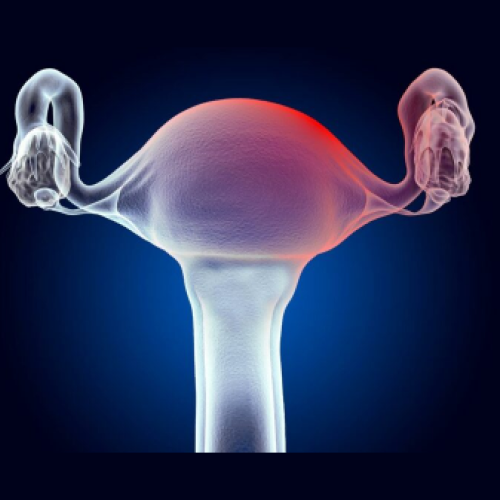
Adenomyosis occurs when tissue resembling the uterine lining (endometrium) begins to grow into the muscular wall of the uterus (myometrium). This condition can lead to the uterus becoming thickened and enlarged, sometimes increasing to double or even triple its normal size.
Adenomyosis is often associated with symptoms such as painful menstrual cycles, heavy or prolonged bleeding with clots, and discomfort or pain in the abdominal or pelvic region.
Symptoms of Adenomyosis
In some cases, adenomyosis may not cause noticeable symptoms or may result in only mild discomfort. However, it can also lead to:
- Heavy or prolonged menstrual bleeding.
- Intense cramping or sharp, knife-like pelvic pain during menstruation
- Persistent pelvic pain.
- Pain during sexual intercourse
Difference between Uterine Fibroids and Adenomyosis | ||
Basis | Uterine Fibroids | Adenomyosis |
Cause | The exact cause is unclear but linked to hormonal imbalances, genetics, and growth factors. | Often associated with hormonal changes and prior uterine surgeries or childbirth. |
Structure | Discrete, solid masses with well-defined boundaries. | Diffuse thickening of the uterine wall without distinct masses. |
Impact on Uterus | May distort the uterine shape depending on their location. | Causes the uterus to become uniformly enlarged and thicker. |
Diagnosis | Detected via ultrasound or MRI as distinct masses. | Diagnosed based on MRI or ultrasound showing a thickened uterine wall with no distinct mass. |
Treatment for Adenomyosis
Our ObGyn may recommend the following line of treatment depending on your unique case:
Non-Surgical Approach
- Pain Relievers: Nonsteroidal anti-inflammatory drugs (NSAIDs) help alleviate menstrual cramping and pain.
- Hormonal Treatments: Hormonal medications, including birth control pills, injections, or hormonal intrauterine devices (IUDs), can regulate menstrual cycles and reduce abnormal bleeding.
- Non-Hormonal Medication: Drugs like tranexamic acid can help decrease excessive vaginal bleeding during menstruation.
Surgical Intervention
- Adenomyomectomy: A surgical procedure to remove adenomyosis from the uterine muscle, similar to a myomectomy, which targets uterine fibroids.
- Hysterectomy: Surgical removal of the uterus, permanently stopping menstrual cycles and eliminating the possibility of pregnancy.

Find trusted and reliable adenomyosis and fibroids treatment in Dubai with Dr. Kavitha Mony
If you’re seeking trusted and effective treatment for adenomyosis or uterine fibroids in Dubai, Dr. Kavitha Mony offers compassionate care backed by several years of expertise. With a patient-centered approach, she provides advanced diagnostic and treatment options.
Whether you require non-invasive therapies or minimally invasive surgical solutions, she ensures that every step of your journey prioritizes your comfort, health, and well-being.
